The right IT support
Client: Sopra Steria
Dec 2021 - Jun 2022
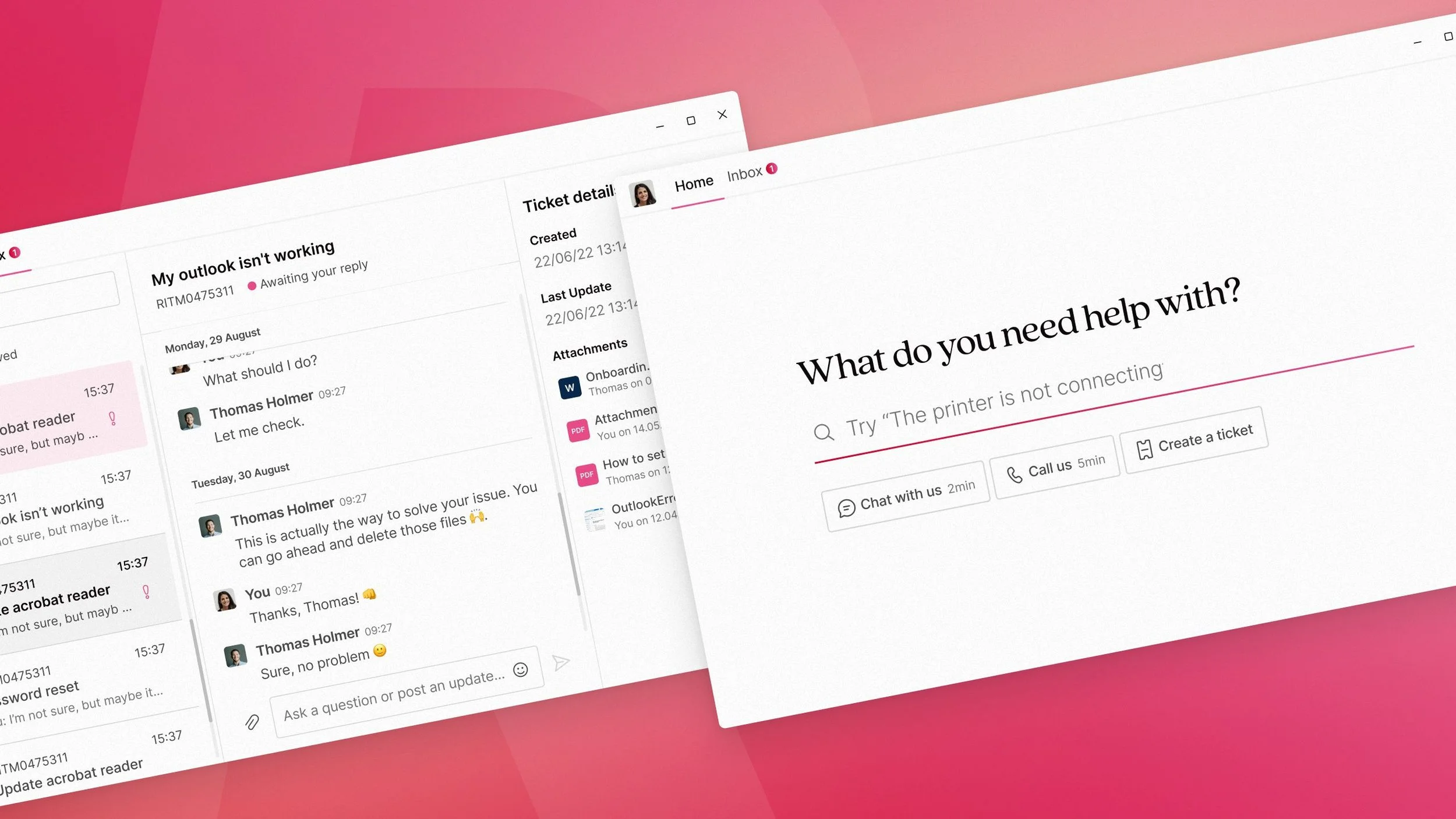
SopraSteria's DPS-O sought to encourage clients to embrace self-service tools for IT support, aiming to cut phone call volume and enhance service scalability. Drawing insights from users, EGGS developed a Standalone Desktop App. This user-friendly hub streamlined access to contact channels, ensuring a clutter-free interface and delivering added value through self-service options.
The challenge
Transition from traditional phone-based IT support to self-service tools
The DPS-O from SopraSteria came to EGGS with the challenge of nudging their clients into using more self-service tools for IT support in order to reduce the volume of phone calls and increase the scalability of their services. Users faced issues with fragmented services, unclear communication channels, and a lack of integrated solutions.
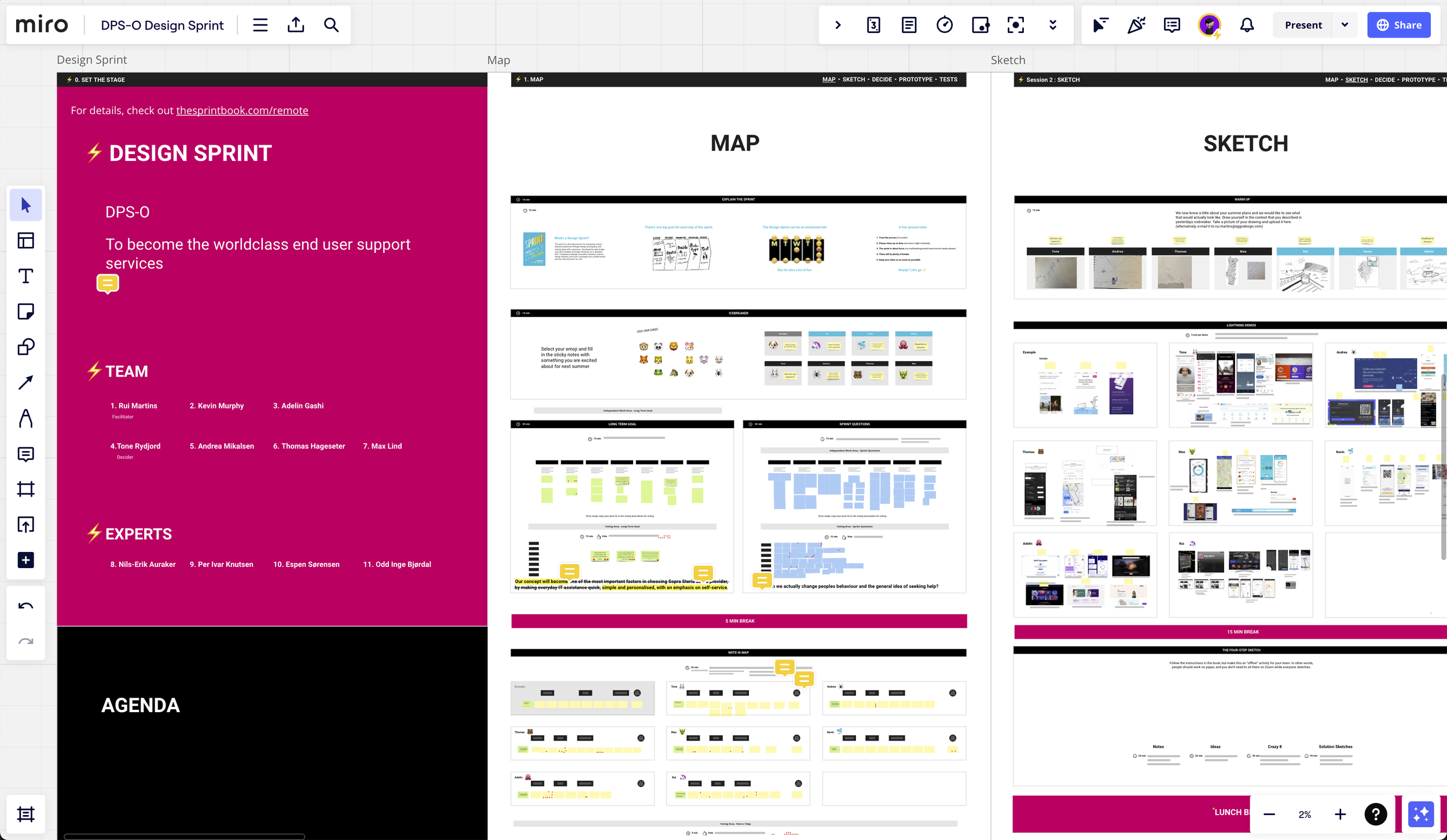
Using Miro to facilitate a 1 week remote design sprint
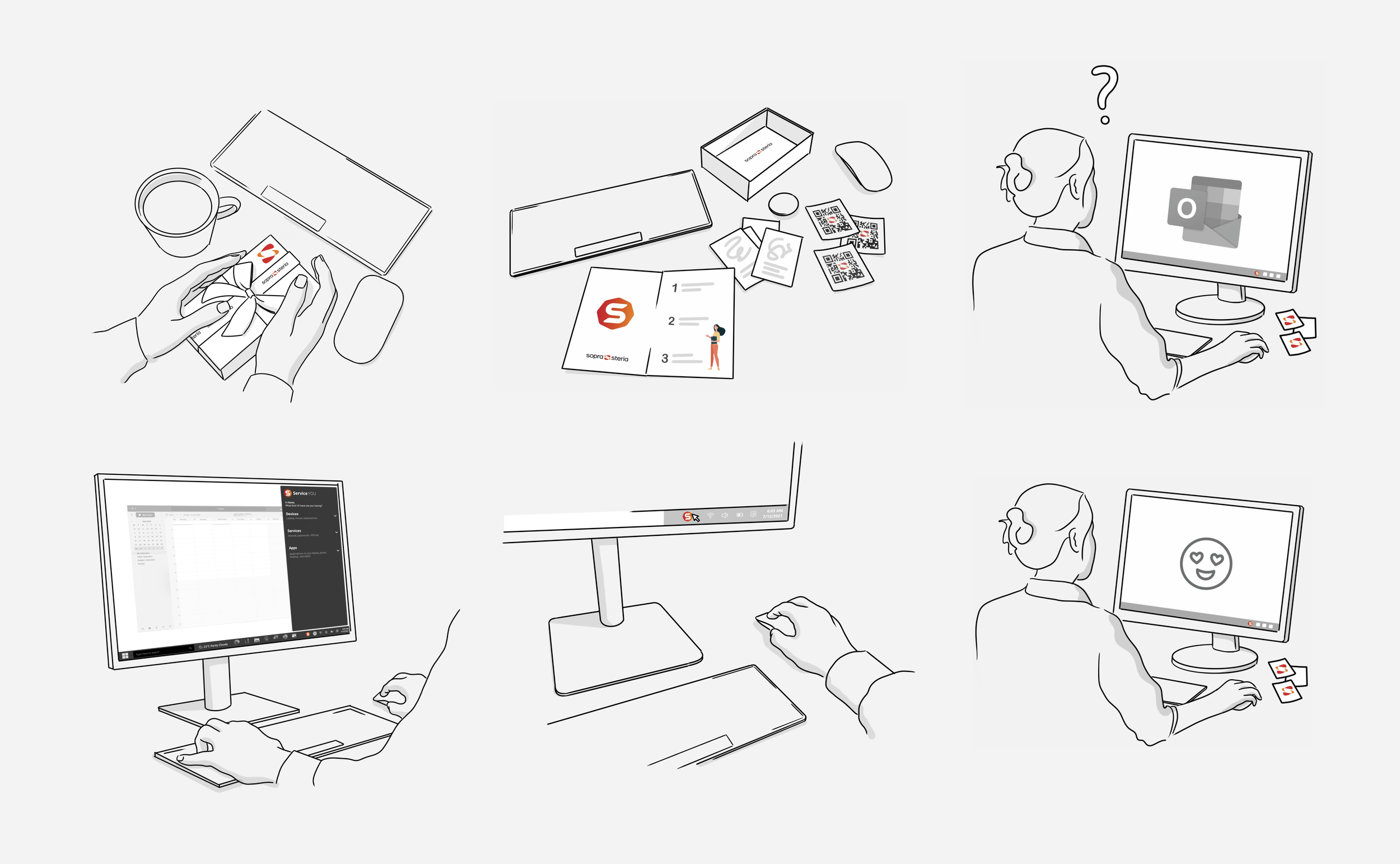
Storyboard combined with prototype as a result of the sprint
Approach
Unifying IT support with a design-driven approach
We initiated the project with a design sprint, engaging in a thorough research phase involving 20+ users across different industries. Insights from end-users and IT support professionals were gathered, revealing patterns, frustrations, and preferences. These findings laid the groundwork for prototype development, uncovering a preference for communication channels based on context and urgency. The results highlighted the need for an integrated communication platform, guiding users seamlessly through various stages of IT support.
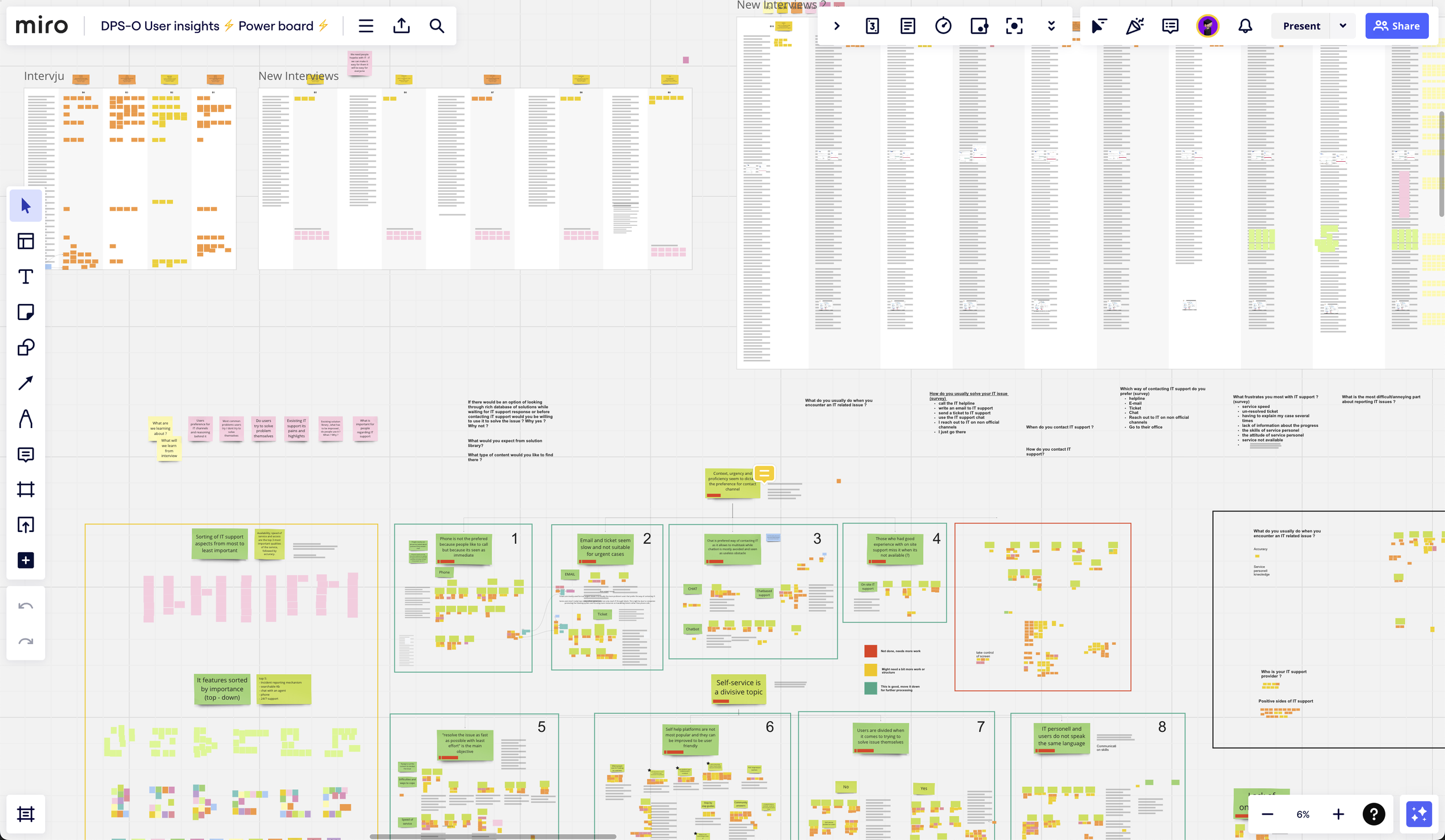
Structuring and analyzing all the insights from the interviews
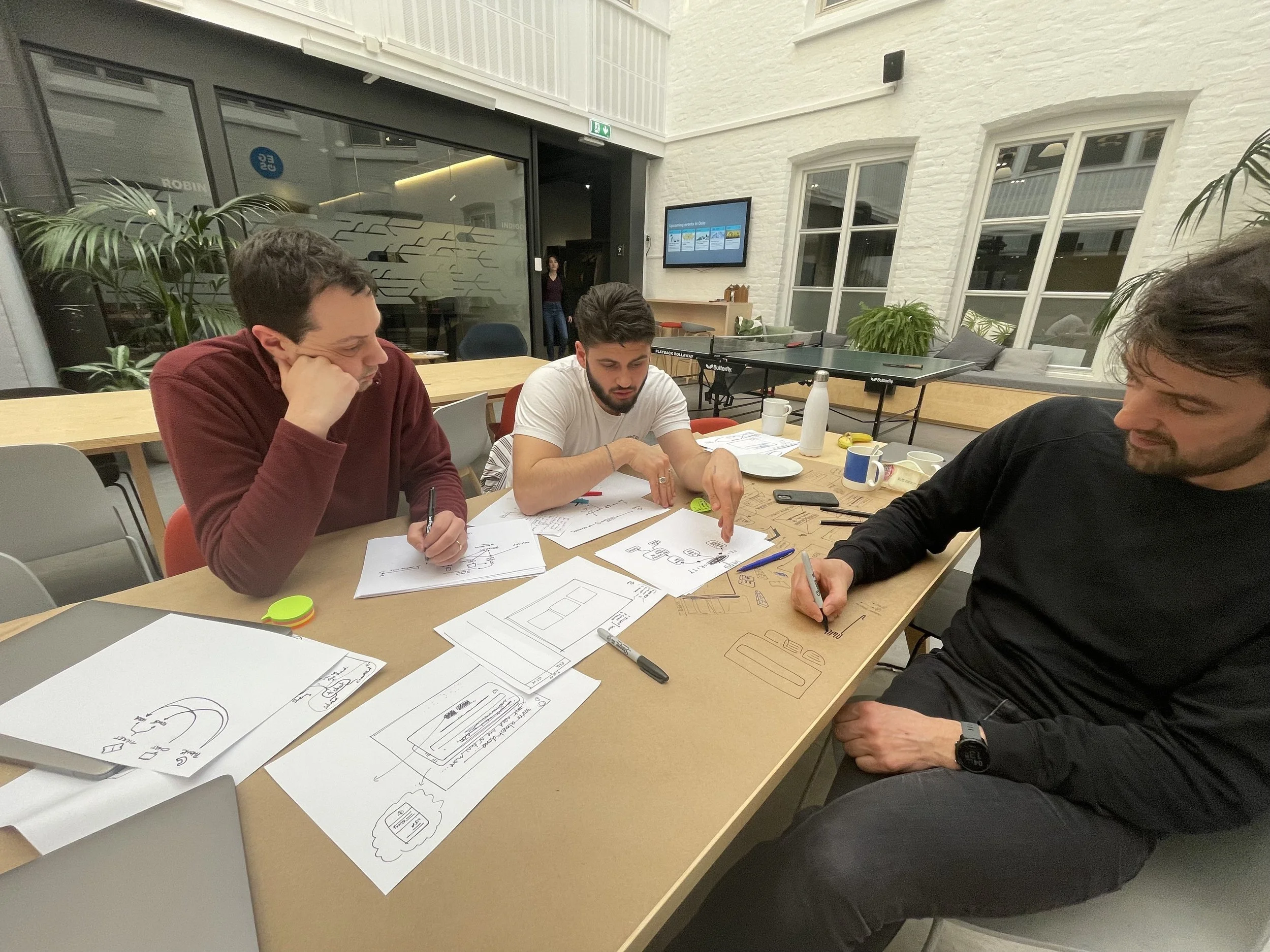
Working with the flow of writing tickets and using self-service options
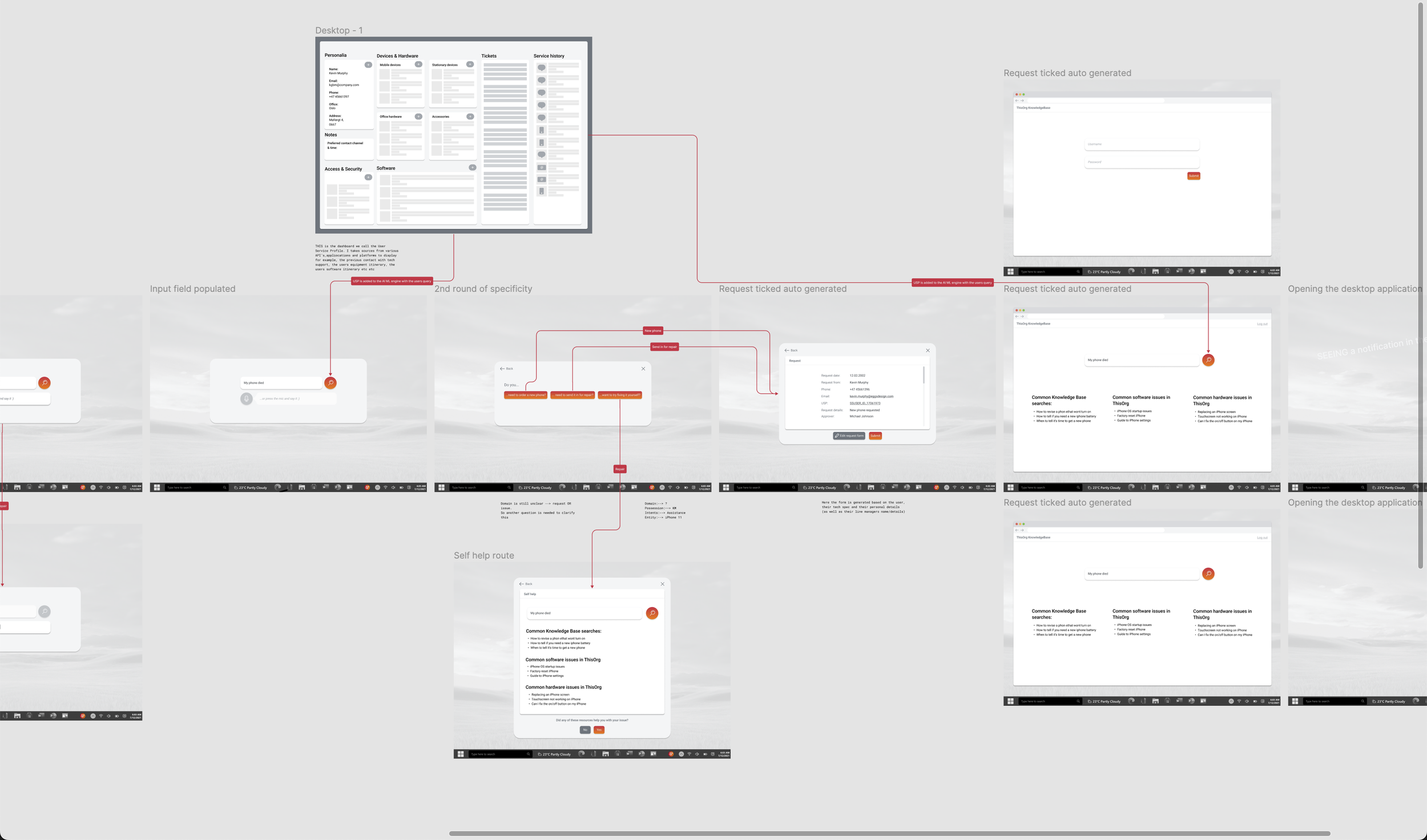
Creating the first prototypes and using wireframes to map out the experience
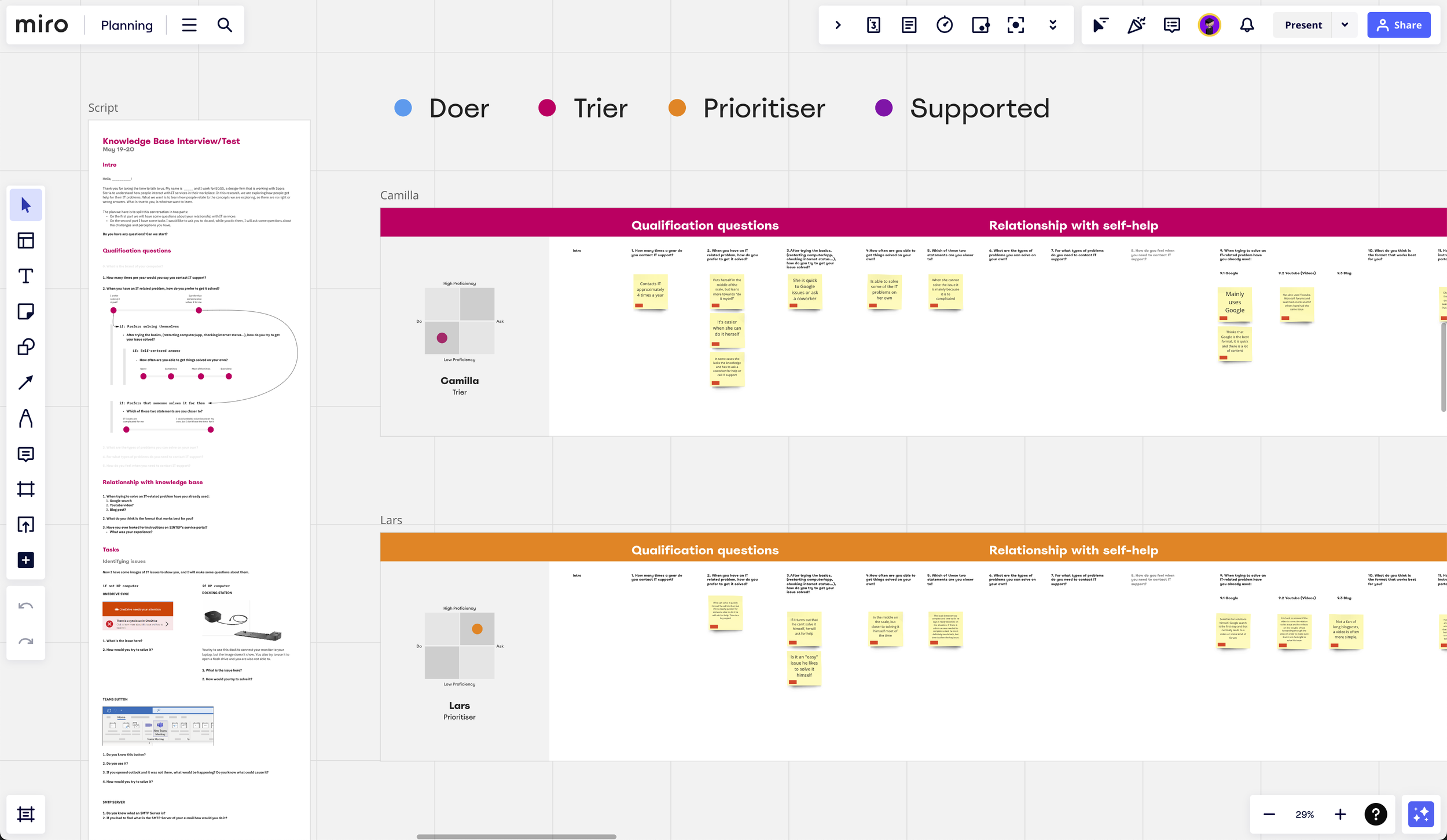
Interview guide created to differentiate users level of IT proficiency
Outcome
Transforming user experiences with self-service solutions
We developed a Standalone Desktop App, providing users with a clean, user-friendly interface that serves as a centralized hub for all contact channels. This solution aimed to streamline IT support, reducing cognitive load and enhancing accessibility, fostering user confidence through onboarding and personalized interactions.
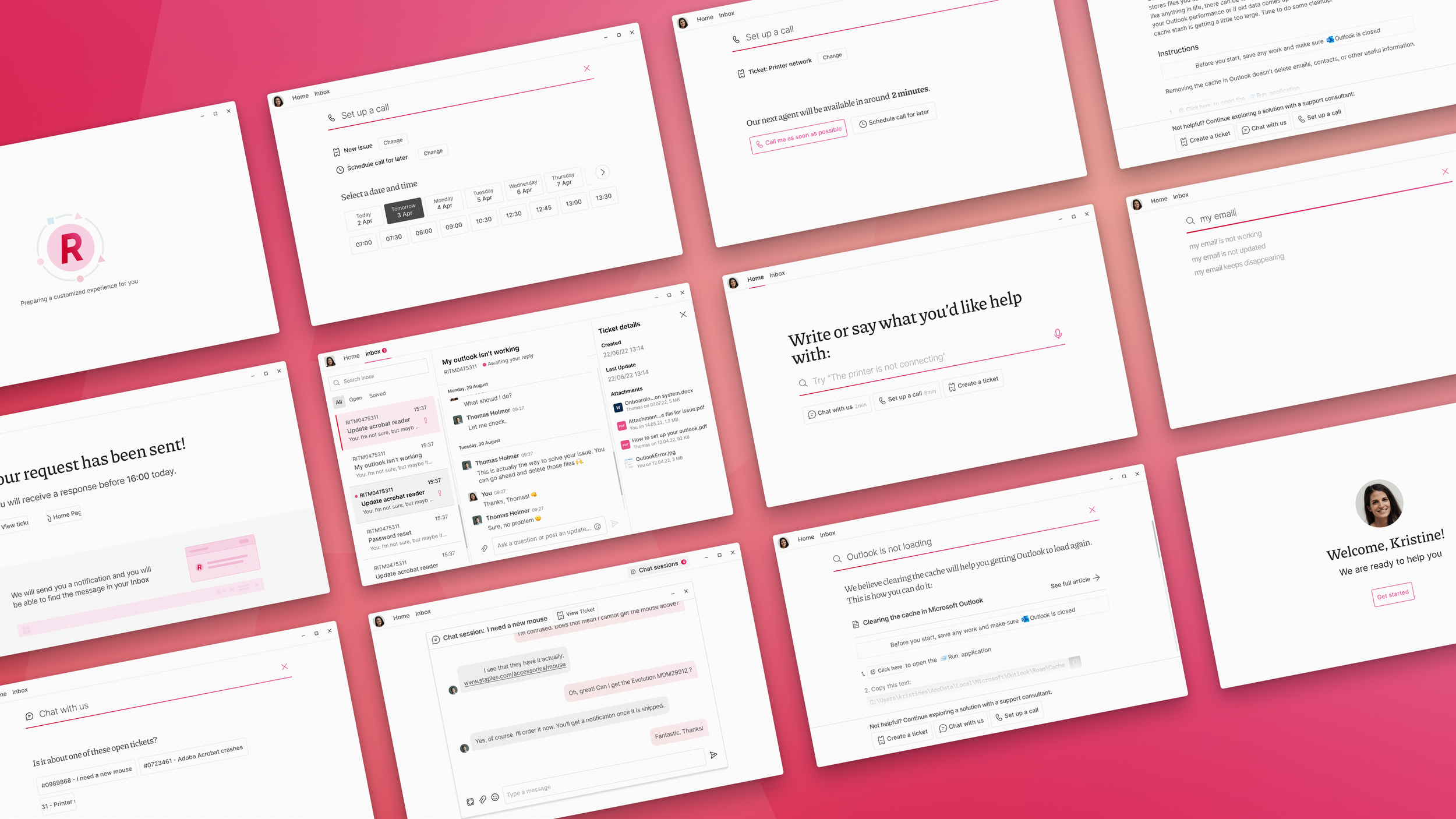
The design for the different screens of the standalone desktop app
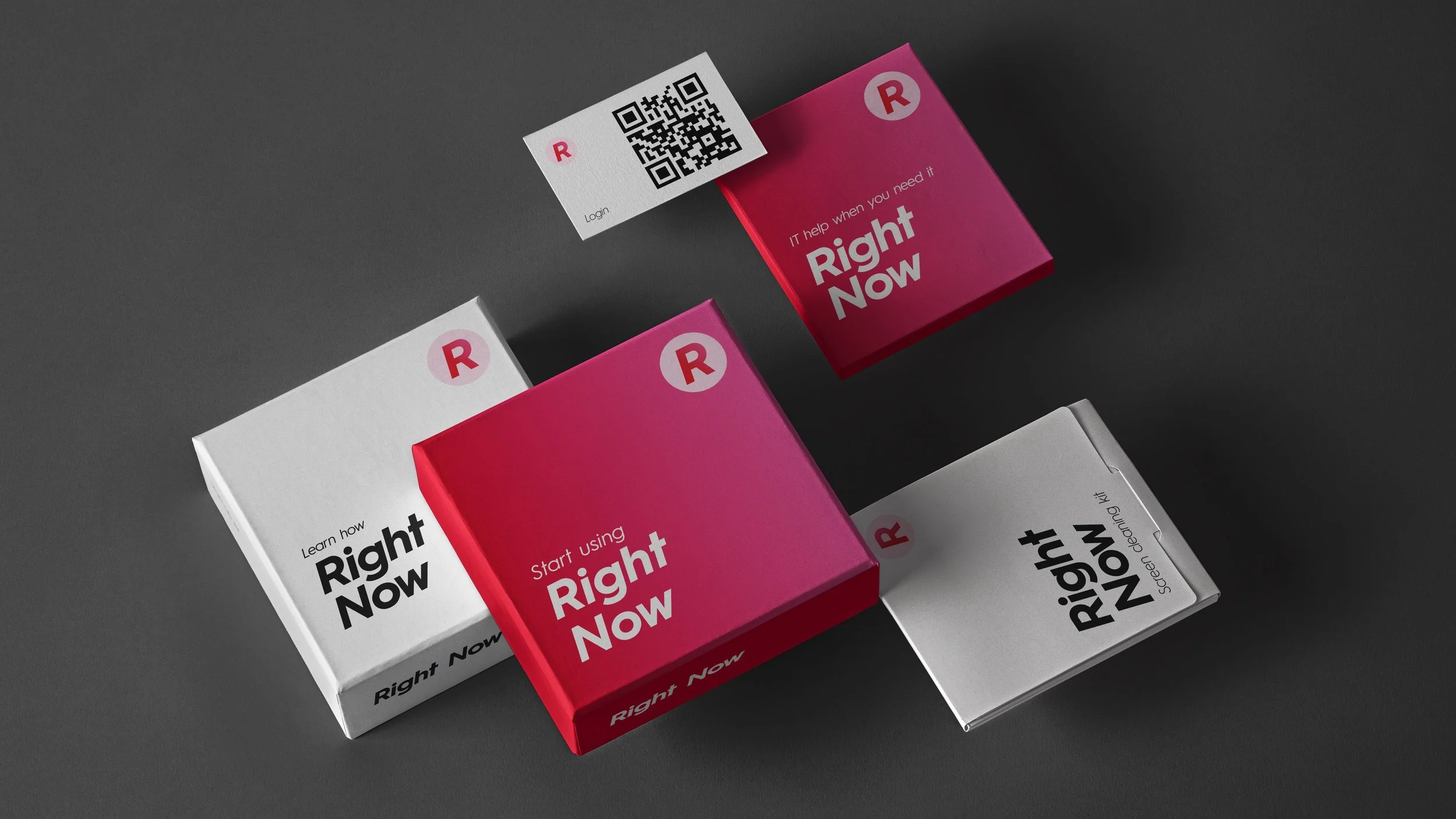
A welcome package makes users aware of the service
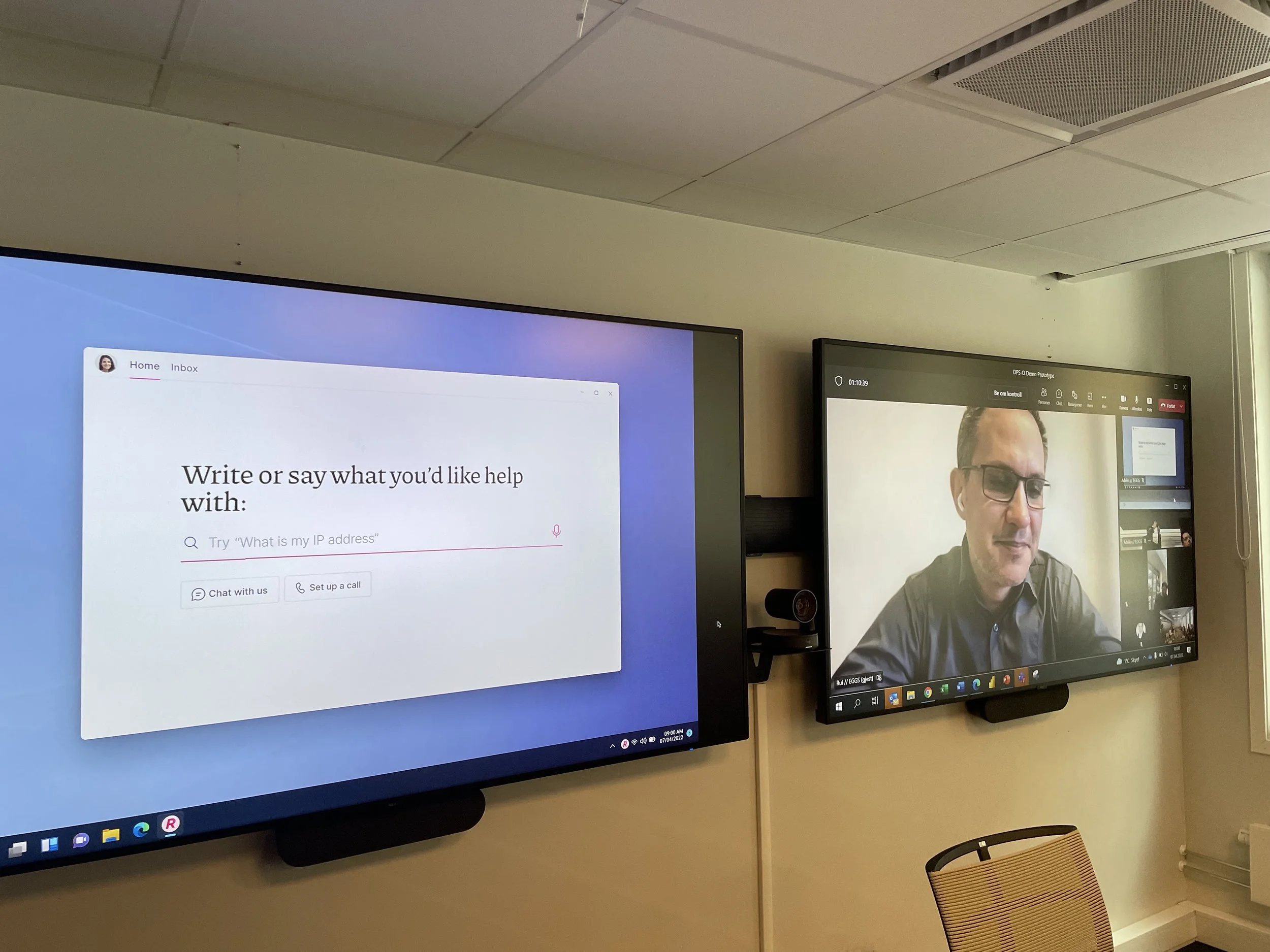
Presenting the final concept for the leader group in Sopra Steria
Impact
Delivering value beyond issue resolution
Our Standalone Desktop App, shaped through extensive user testing, delivers significant value. Users gained access to a simplified, all-in-one platform that adapts to their context, devices, and preferences. The integration of a natural language interface allows users to articulate their concerns in their own language, fostering better communication. The strategic use of AI+ML in dynamic content, automation, and predictive maintenance not only saves time but also improves the overall support experience.
Contribution
My contribution and responsibilities
“Adelin has been a core member of the team since the start of the project as the perfect pivot between UX and UI. He has contributed with extensive insight work, extracting conceptual value in the bigger picture and helping with his exceptional visual skills. He helped facilitate workshops and various discussions with important stakeholders throughout the project, ensuring a collaborative approach in the project.”
Help facilitate design sprint
Leading user interviews
Concept creation and development
Wireframes and workflows
Detailed UI and visual design
Testing and feedback from users
Reflections
Navigating through miscommunication and role misalignment
Navigating the vast landscape of IT support initially felt overwhelming, but our journey led to a solution that promised to address Sopra's complex issues effectively. However, the project's early stages were affected by miscommunication and role misalignment between Sopra's internal team and EGGS designers. Factors like time constraints, indirect messages from project leaders, and mismatched skill sets contributed to the struggle. Fortunately, a pivotal time-out allowed reflection, fostering collaboration and resolving challenges, leading to a successful outcome.